

~ Chianti Classico is full of nooks, crannies and great wines ~
Chianti Classico is, and always will be, unique. Compared to other prestigious appellations in Tuscany, Chianti Classico has transformed itself and evolved more rapidly over the past 5-10 years than its counterparts. That’s both good and difficult to keep track of. This article will help.
Harvest Reports
The above string of vintages, with the exception of 2023, are all of good to excellent quality. 2020 and 2021 are widely regarded as excellent. 2022 and 2024 are generally similar in that they offer very good quality but a significantly reduced crop size given the heat and drought conditions.
2023 was a disastrous year for much of Tuscany. The vintage was marked by frost, hail and incessant rain. As a result, downy mildew (Peronospora) and numerous fungal diseases were rampant. Many producers dropped or sold fruit and the ones that produced, did so in minuscule quantity. It will be interesting to see how those wines show.
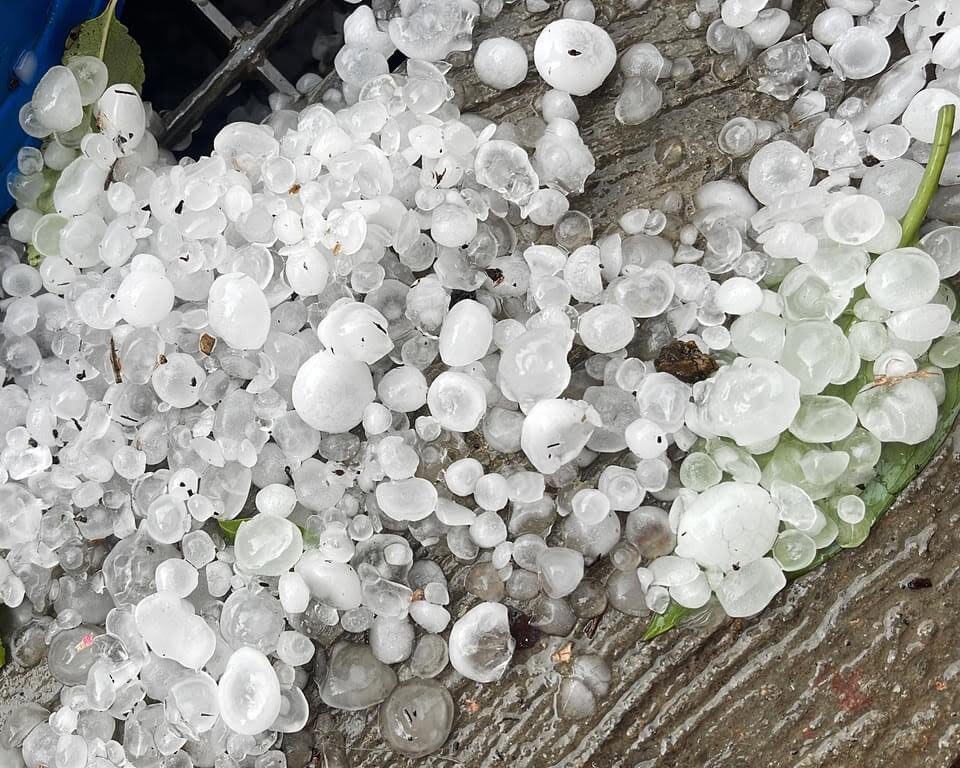
~ One of the culprits in 2023 was widespread hail. This followed vines damaged by early Spring frosts and then in May, it rained every day. The result, major plant disease ~
Chianti Classico’s Evolution
So what has Chianti Classico done to evolve? Essentially, they have doubled down on Sangiovese and emphasizing Place. Consorzio President Giovanni Manetti deserves a lot of the praise for this. The key changes under Manetti’s tenure are as follows:
- Creation of Gran Selezione in 2014
- Creation of 11 Additional Geographic Units (UGAs) in 2021
- Permitting Commune labeling based on UGAs for Gran Selezione in 2023
- Mandate for Gran Selezione to be 90% or more of Sangiovese beginning 2027
- Mandate for Non-Sangiovese of 10% to be native Italian grapes only.
Chianti Classico and Riserva remain a minimum of 80% Sangiovese and dozens of other approved grapes may be used to balance the 20%. This includes both international varieties and obscure indigenous examples. It’s a matter that still leads to confusion. No white grapes are permitted.
I will note blends and Commune whenever possible in the tastings below. With that, let’s get to it!
Chianti Classico Tastings
Arguably, when thinking of Tuscan wine, there is no more important family than Antinori. For 26 generations, the family has made wine across the province. Their Peppoli Estate sits about 5 kilometers north of the famed Tignanello property. With 50 hectares under vine, it’s a relatively small estate. The key takeaway, is that Peppoli is always produced with estate owned fruit – never purchased grapes. In this sense, Antinori controls the style and ensures consistency.
The 2023 Antinori Peppoli Chianti Classico (San Casciano Val di Pesa) is a brilliant dark ruby. There’s lots of berry and dried herb character here on the nose and palate. This has really nice aromas of fresh, crushed red fruit and toasted vanilla. It shows very well for the difficult 2023 vintage and I rather enjoy it. The palate is fresh with flavors of spice, crushed berry and hints of baking spices. A polished effort, but it does finish a bit drying. 90% Sangiovese and 10% Merlot & Syrah. 88 points. Find this wine.
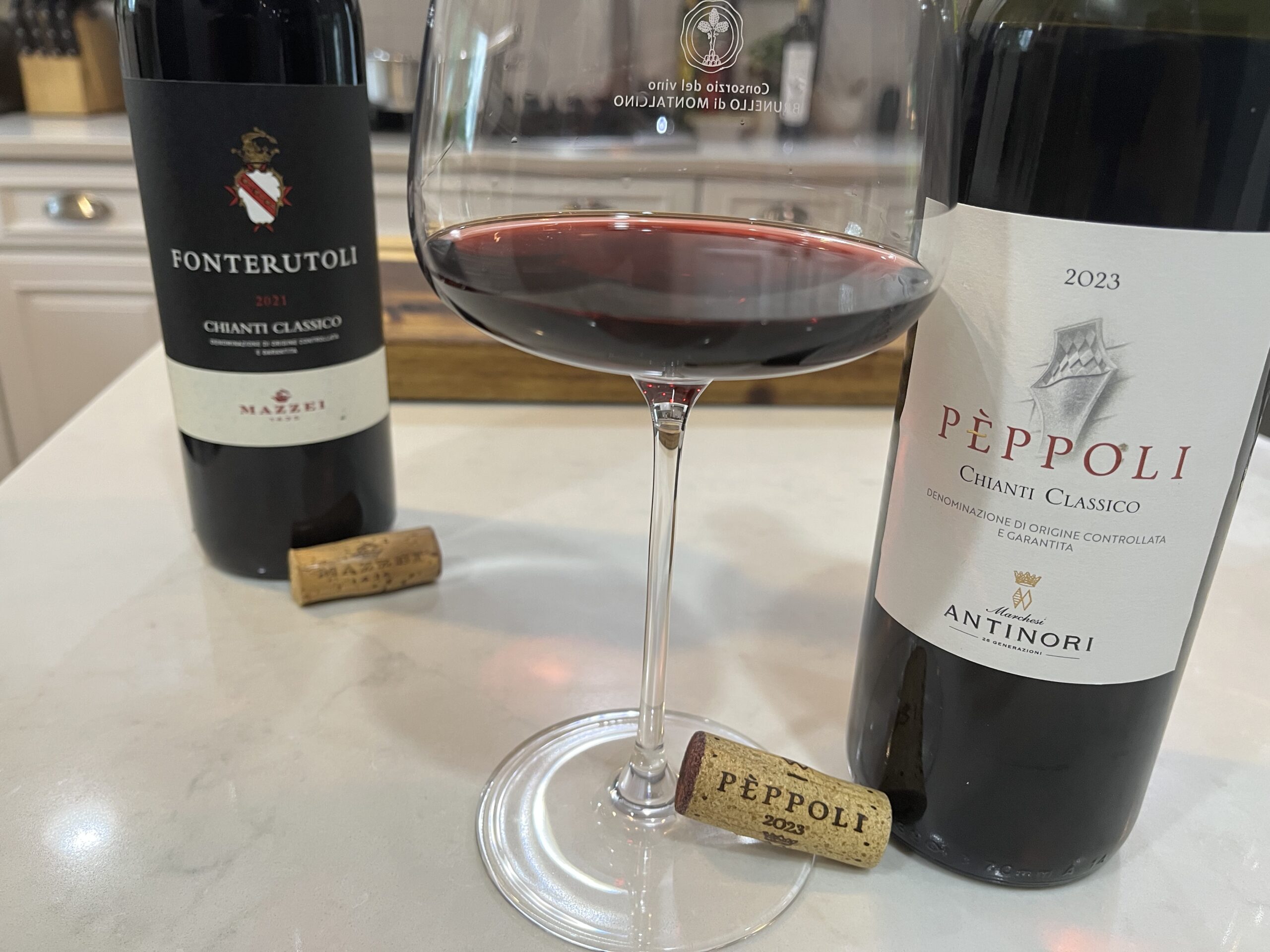
~ These two wines were served side by side with dinner. That is Peppoli in the glass here ~
Another Tuscan icon is unquestionably Mazzei. Since 1435, the family has crafted wine in Chianti Classico at their Castello di Fonterutoli Estate in Castellina. In fact, it was Ser Lapo Mazzei, a Florentine Notary, who authored the first known reference to “Chianti” wine in 1398; linking the family to Tuscan viticulture even before they owned Fonterutoli. Today the Estate is run by Filippo Mazzei.

~ I last visited Fonterutoli in 2019. This wall in their Cellar is the excavated natural barrier. It is so far below grade that it constantly trickles with water – providing perfect natural humidity to the Cellar ~
The 2021 Mazzei Chianti Classico (Castellina) is gorgeous and seriously structured for a Chianti Classico. This shows more traditional aromas on the nose than the Antinori. Fresh herbs, cake spices, crushed cherry with soft earth tones follow through to the palate. In the mouth this is fresh and lively. Man is 2021 a wonderful vintage! Bright, zippy and with persistence. This wine shows much more authenticity than the Antinori, whose polished nature speaks of the international grapes in the blend. This is 90% Sangiovese, 5% Colorino and 5% Malvasia. 90 points. Find this wine.
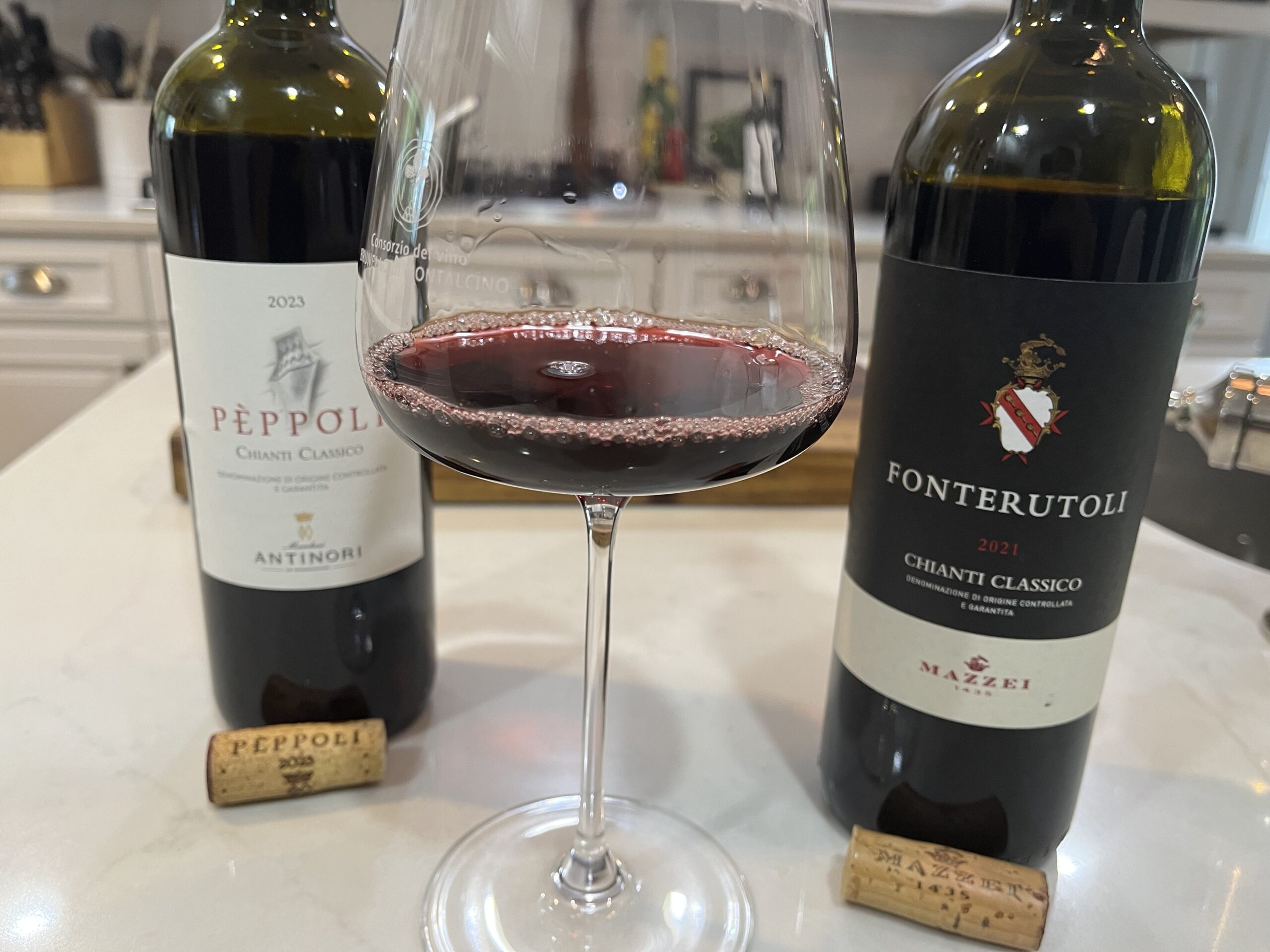
~ This is the Fonterutoli in the glass ~
When you think of Chianti Classico’s best Sangiovese producers, a common thread keeps surfacing. It’s not a single Commune, a special hill, or a single type of soil. It’s a man. Franco Bernabei.
Lornano practices sustainable agriculture under the watchful eye of Silvio Campatelli. Specifically, this includes utilizing only natural fertilizers and preservation of natural resources. No chemical fertilizers or man made herbicides are employed. As a result, the equilibrium with the local environment is well balanced for the production of premium grapes. Lornano extends over 180 hectares of which only 70 are planted with vines. Of this total, 80% represent 15 various clones of carefully selected Sangiovese grapes.
The 2021 Lornano Chianti Classico (Castellina) hails from Monteriggioni. Flowers, spice and lots of crushed fruit on the nose provide amazing aromatics. Hints of sandalwood too. On the palate there is loads of cherry with sweet herbs, sweet fennel and toasted spices. This punches way, way above its price point. And I am almost in agreement with Luca here! I love this. Fresh, vibrant and juicy. Sapid herbs and mouthwatering fruit linger on the finish. 100% Sangiovese. 95 points. At sub $15, load up! Find this wine.
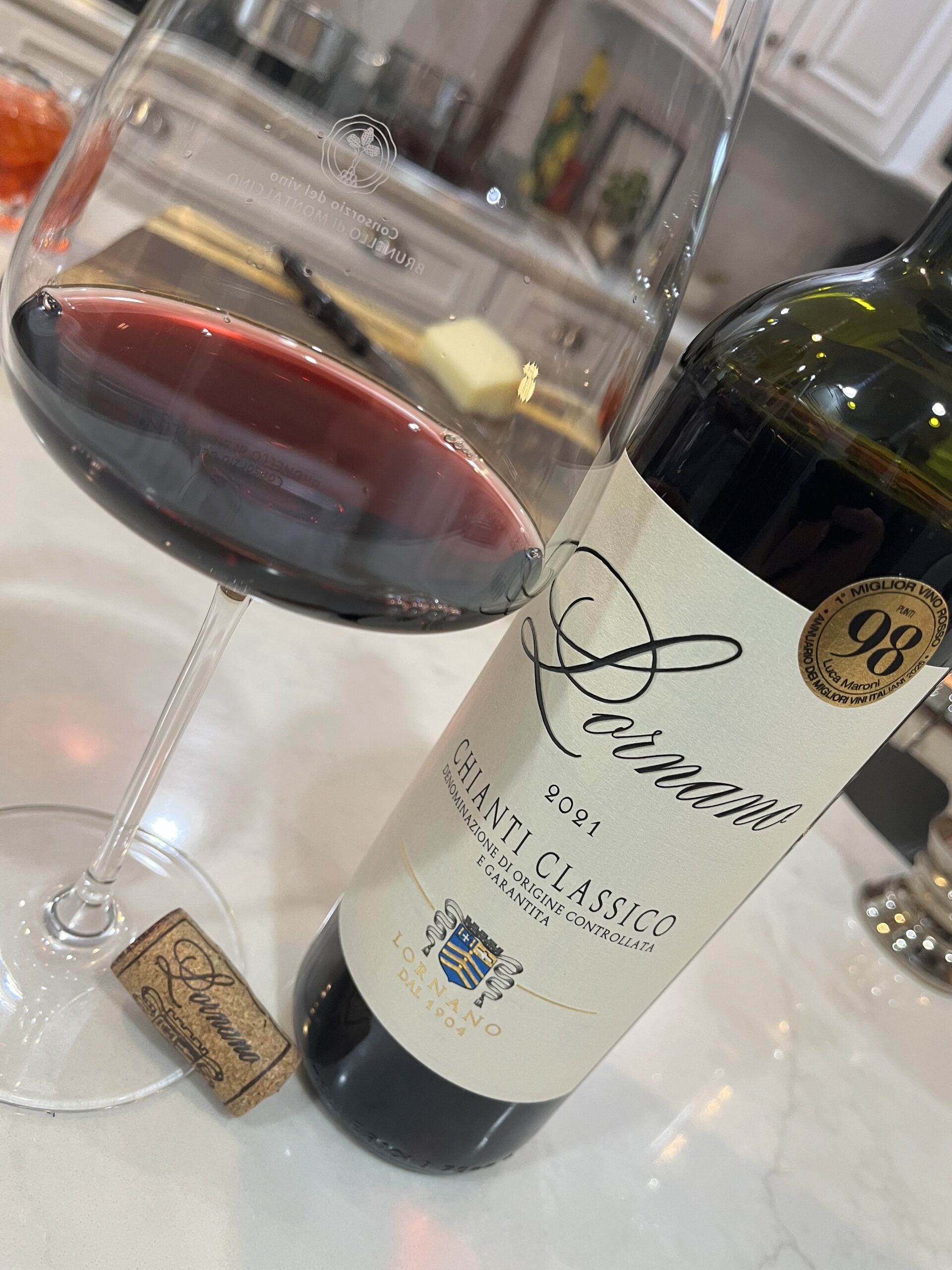
~ This. Is. Worth. Stockpiling. ~
When thinking about Chianti Classico you might not recall Rocca delle Macie at the front of your mind. That would be a shame because this producer, albeit one that seems to settle into the background noise, is quite good.
The “Le Macie” Estate was acquired by Italo Zingarelli in 1973. Since that time, vineyard expansion, cellar improvements and hospitality have been added and renovated. Now under the watchful eye of Italo’s son Sergio, there are almost 200 hectares under vine scattered at various areas of Chianti. Sergio’s son and daughter are involved in the winery now so the future is set for Rocca delle Macie.
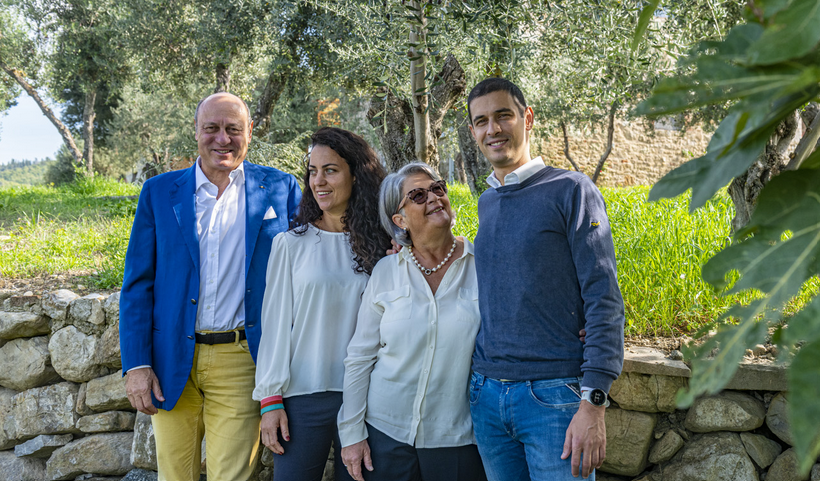
~ The Zingarellis: Sergio, Guilia, Andrea & his wife ~
The 2022 Rocca delle Macie Chianti Classico (Castellina) is a pretty, dark ruby in the glass. A little funk on the nose with crushed red berry and mushroom is fairly complex. The funk is completely absent on the palate. This shines in the mouth! Bright berry, toasted spices, dusty minerals and herbs are wonderful. This is so well balanced for the heat of the vintage; it’s only 13.5%. What can you complain about for the price? Niente! 89 points. Find this wine.
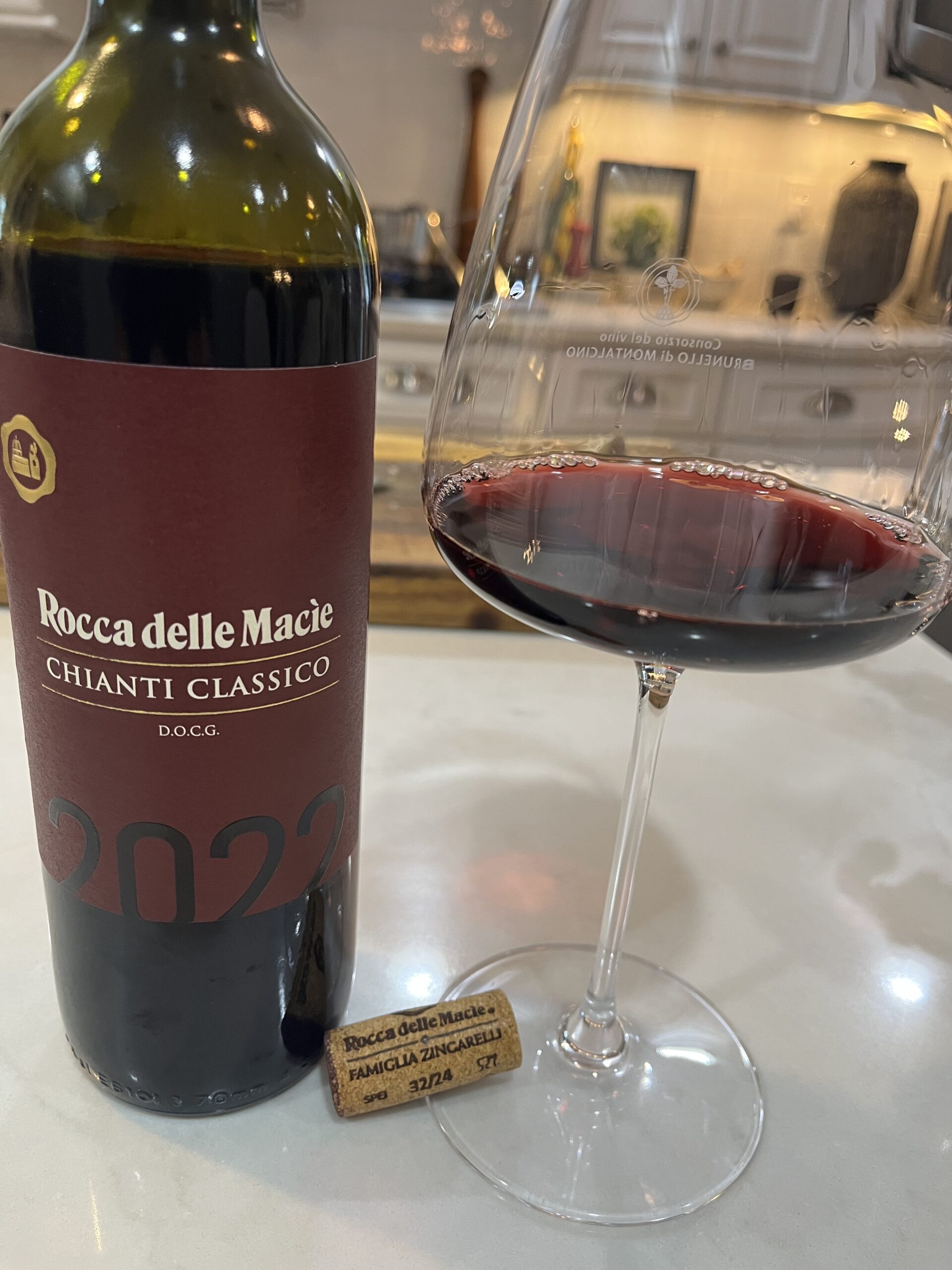
~ Rocca delle Macie is a seriously under appreciated estate ~
Castello di Monsanto has become a fixture on the Rustic Tuscany Tour. And for good reason. Despite being centuries old, the Castle and its many labyrinths look as though they were created by Walt Disney Imagineers. Old, but in mint condition.
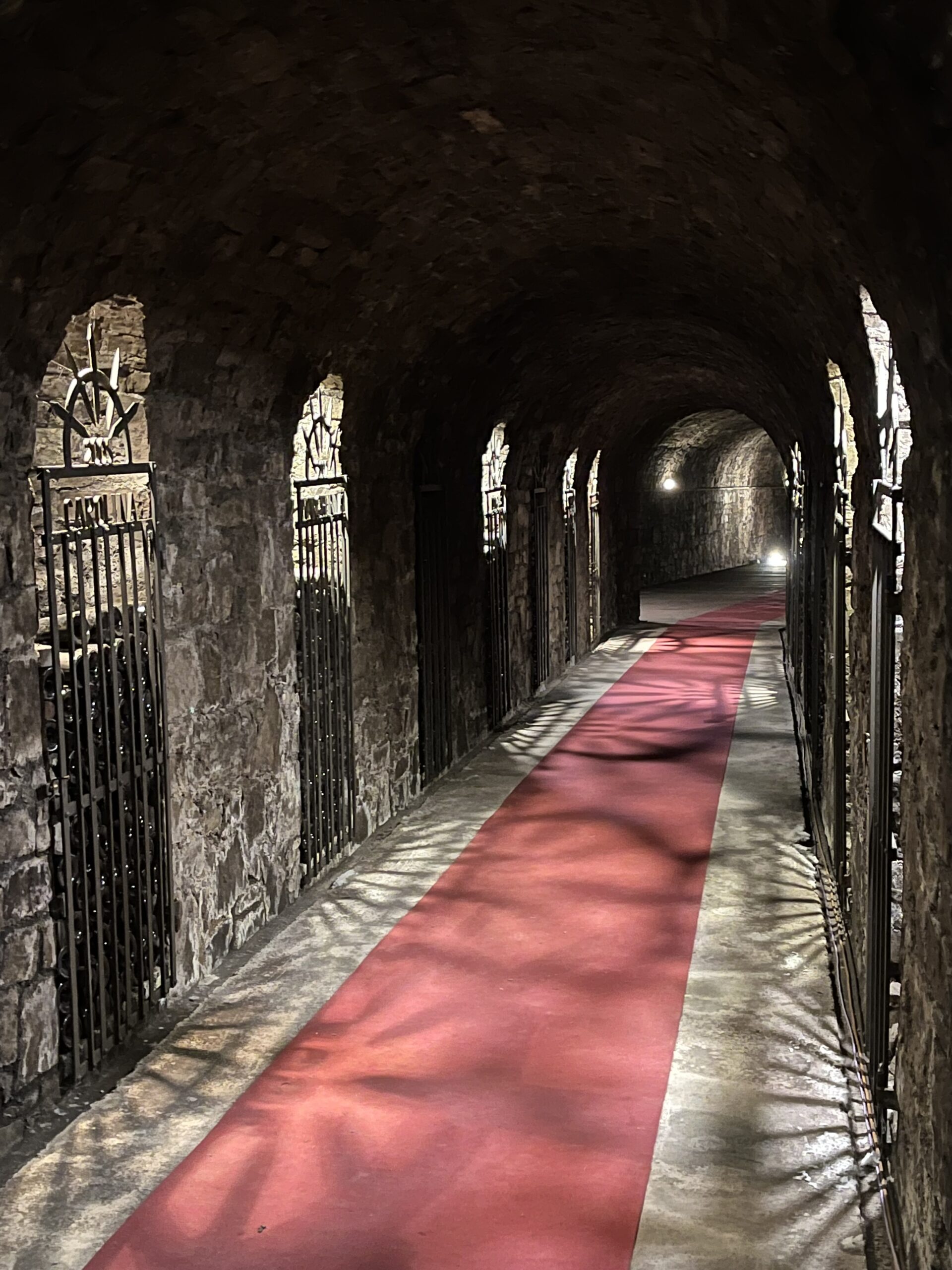
~ This is a long tunnel that leads from the new cellar, to the ancient cellars under the Castle. The passageway and ancient cellars were dug and built by hand by 3 gentlemen whose names are inscribed at the entrance ~
Monsanto is unique in many ways. The tunnel above leads deep under the ancient Castello. It’s where Monsanto has created a “living library” of its wines. It’s one of the only wineries in Europe with vintages going back to the estate’s inception. Mainly the family has retained vintages of Il Poggio, but there are also vintages of “Sangioveto” and “Nemo”. The library wines are sold at the estate and each year, one “group” of wines are inspected and topped off if need be. Then they are filled with the original vintage and re-corked. It’s sort of a rotating quality control.
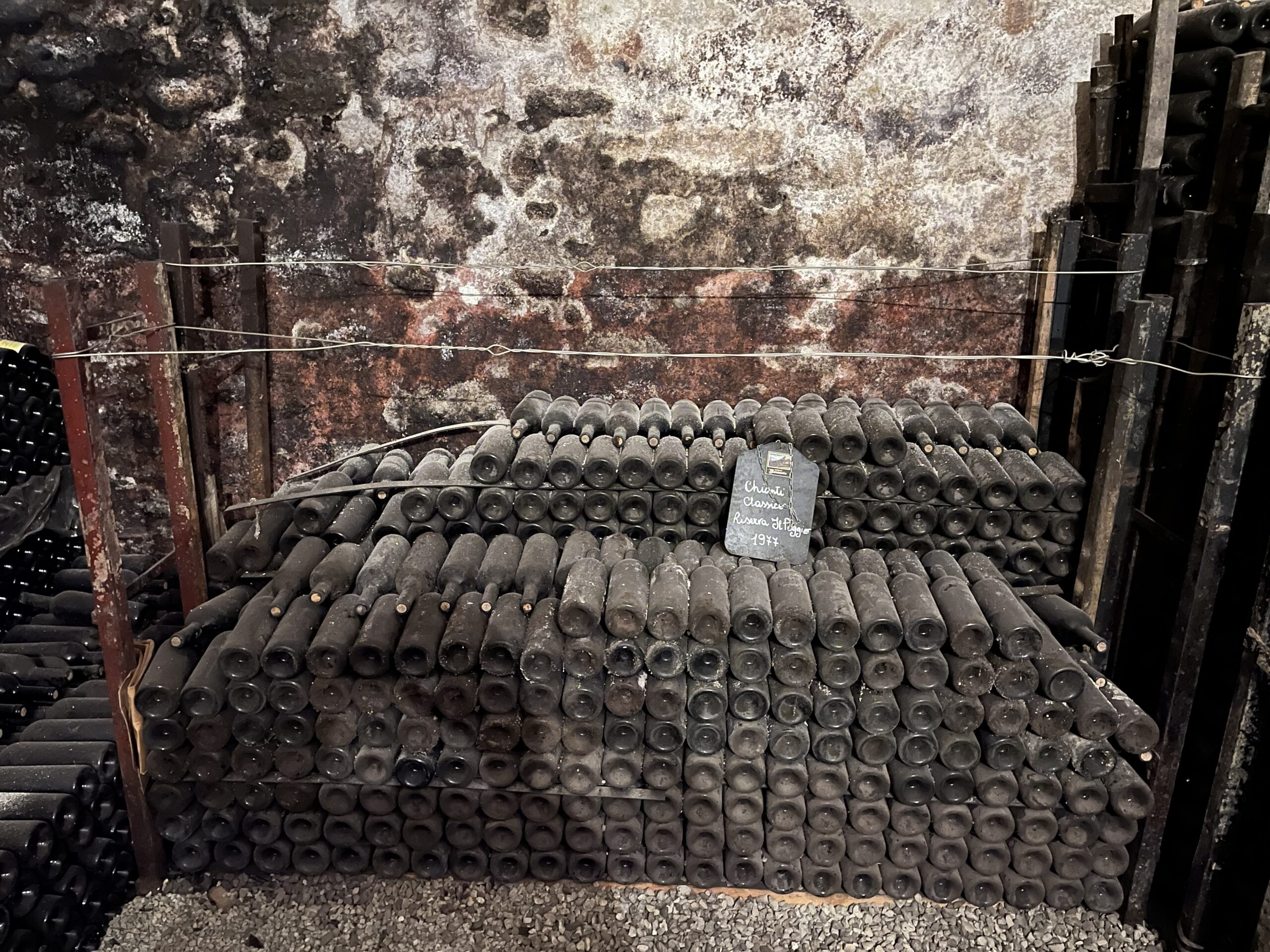
~ This is typical. Here is the 1977 Il Poggio – then a Riserva, now a Gran Selezione. ~
The 2021 Castello di Monsanto Riserva (San Donato in Poggio) is its usually gorgeous self. A bit piney on the nose with warm cherry aromas and toasted spices that linger nicely. This is so classy on the palate with bright berry and wild cherry accented with fresh leather and sweet herbs. This is so wonderful and really the gem of Barberino Tavarnelle. 93 points and a great value around $25-$30. Find this wine.
The pine and evergreen aromas don’t surprise as the estate is surrounded by woods filled with pine, cypress and oaks.
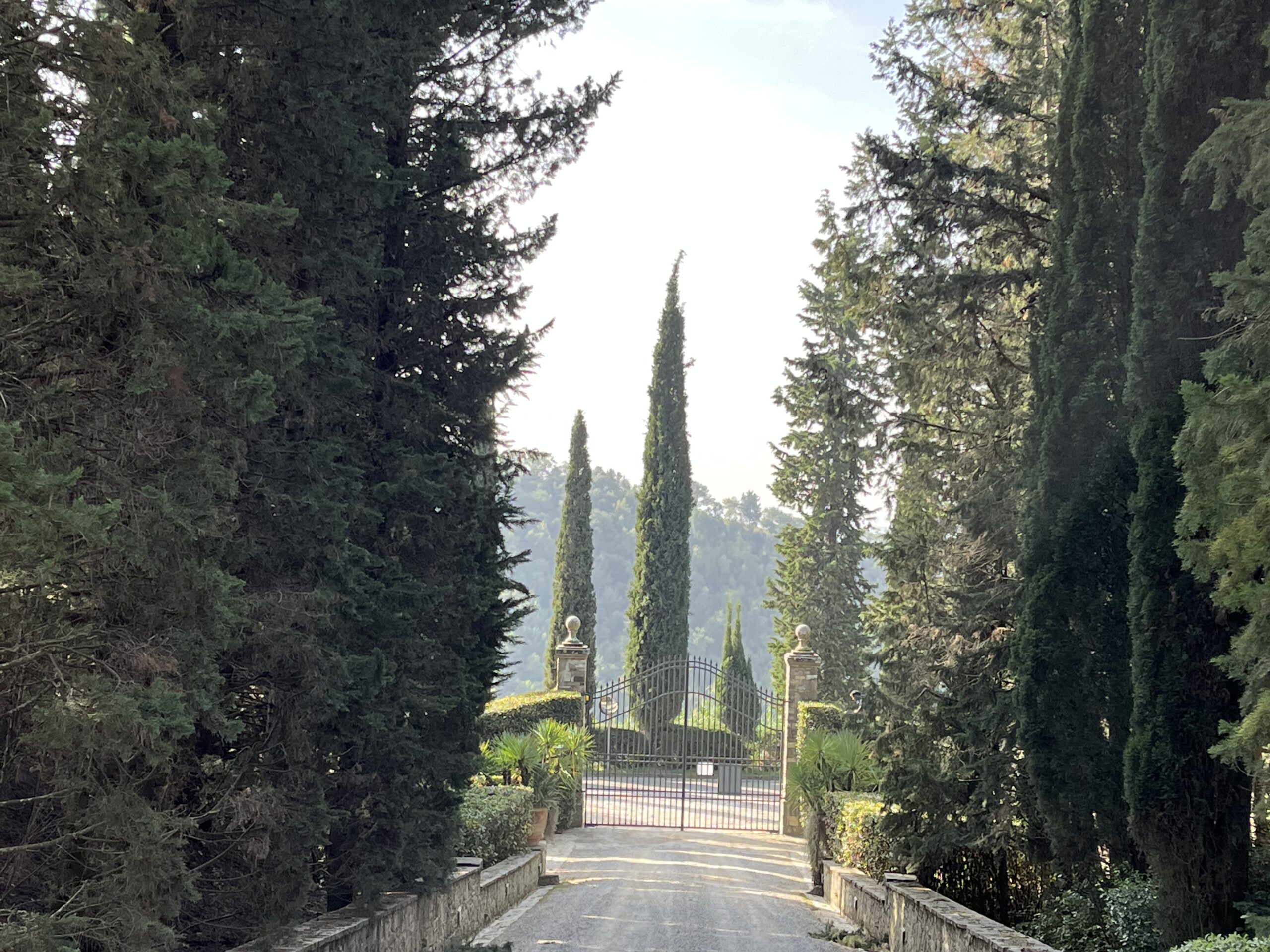
~ Looking down to the entrance of the Estate ~
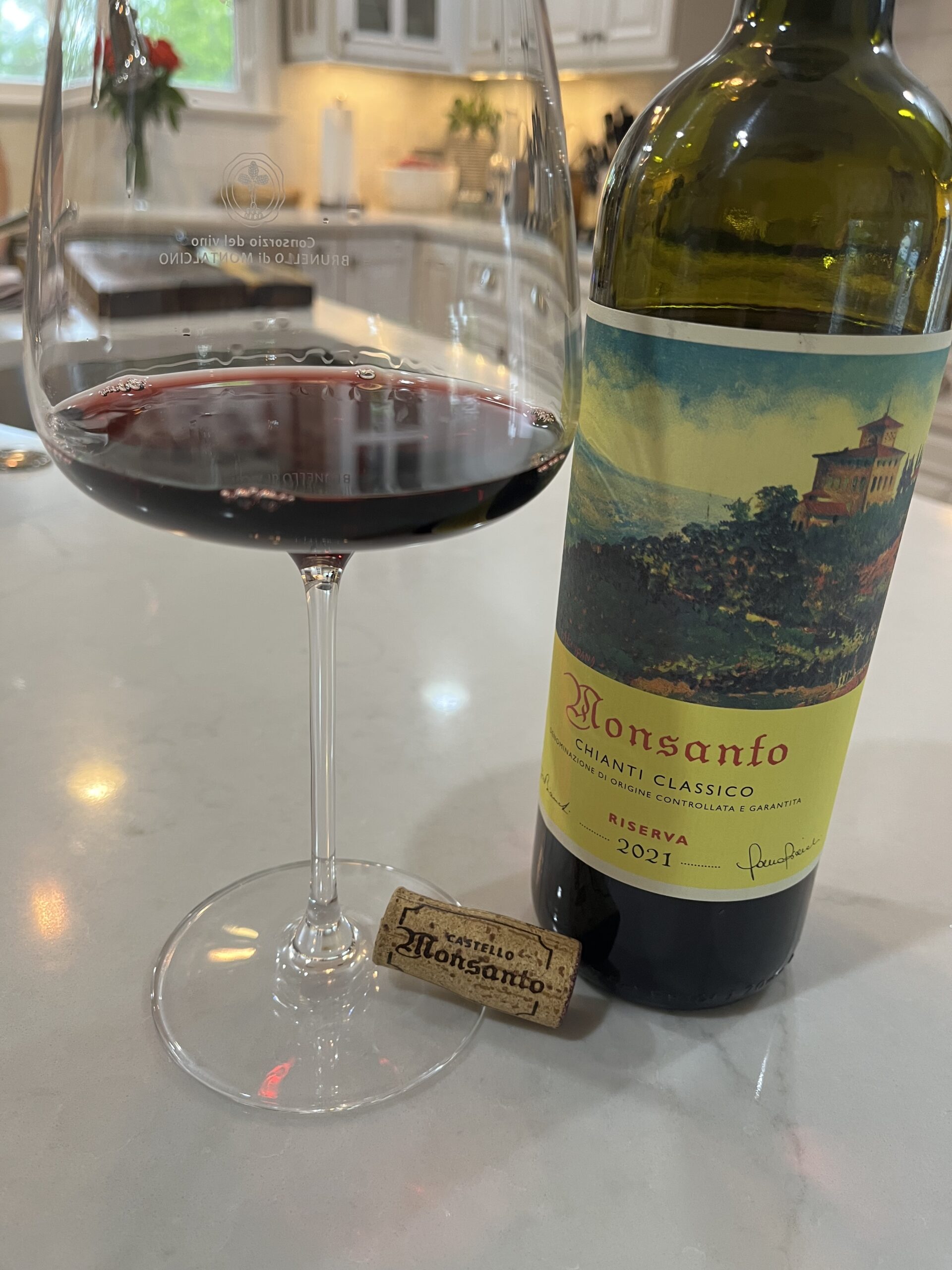
~ There’s a lot of class and complexity here ~
Castello di Ama is named for the tiny hamlet where it sits, perched high in the Tuscan hills midway between Gaiole and Radda. Since 1982, the husband and wife team of Marco Pallanti and Lorenza Sebasti have driven this property at a dynamic pace. Marco was named winemaker of the year by Gambero Rosso in 2003, and Castello di Ama was Gambero Rosso’s Winery of the Year in 2005. Still, Pallanti does not rest on his laurels. His stable of wines are some of the most sought out from the area.
The 2023 Castello di Ama Chianti Classico (Gaiole) is a pretty violet color. Sweet herbs, eucalyptus and crushed cherry mark the nose with hints of cracked black pepper. Gorgeous aromas with a hint of menthol too. This Chianti Classico shows impressive concentration for the vintage. The tannins are a bit grippy too, and those turn slightly astringent on the finish. That’s the vintage. And Pallanti mastered it well. 90 points. Find this wine.
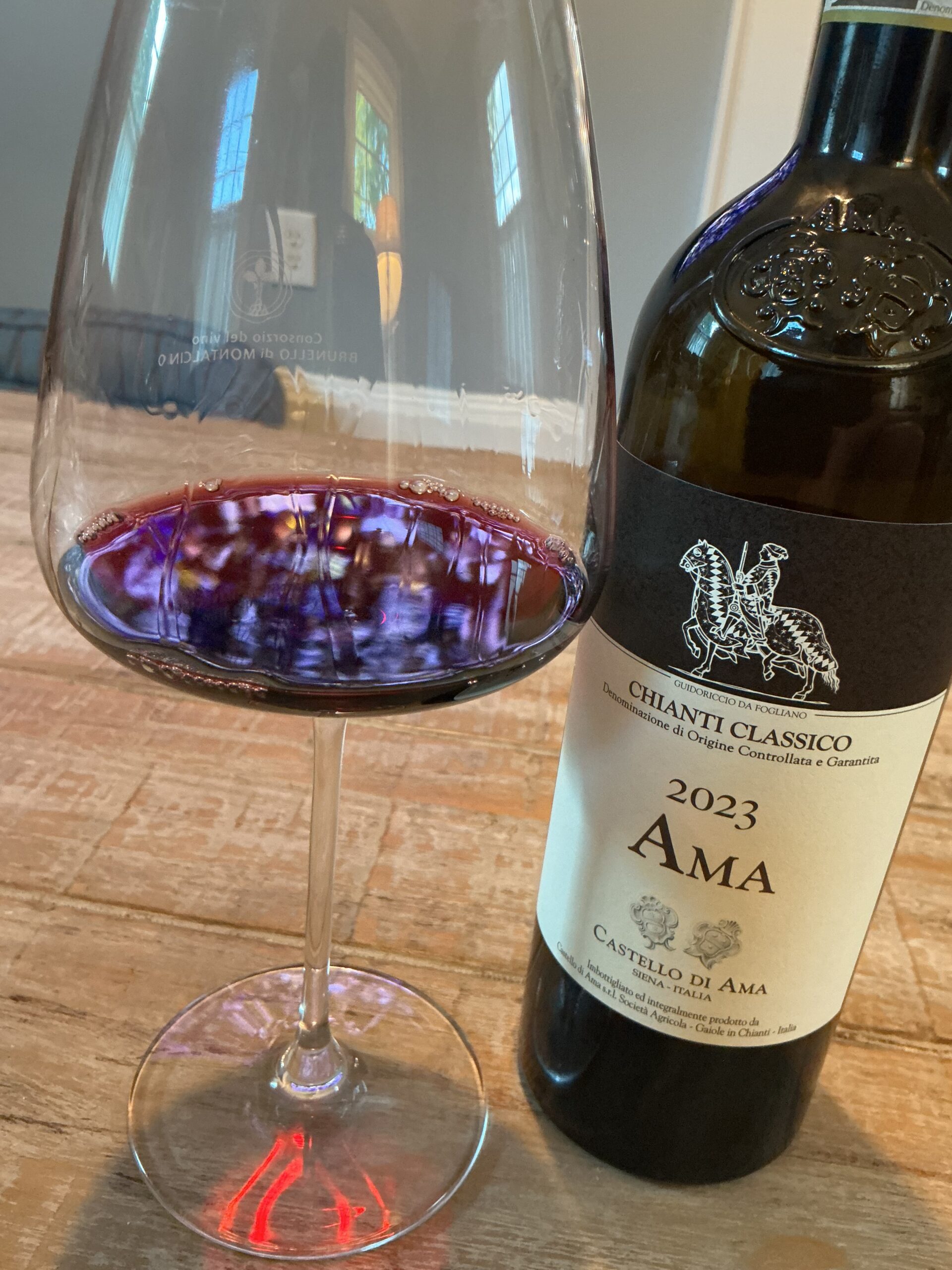
~ This is quite good, but the finish shows the vintage trait ~
Castellare di Castellina is a prominent producer from Castellina that I think is often overlooked. I’ve written about them quite a bit over the years and yet, they won’t be one of the first names mentioned when discussing top producers.
Located in Castellina in Chianti, the 46 acre estate has become a sort of natural refuge for forestry and wildlife. In fact, many of the birds that grace Castellare’s labels are native to the estate which is legally protected by the Italian Government. About 25 acres are devoted to vineyards.
The 2021 Castellare di Castellina Il Poggiale Chianti Classico Riserva (Castellina) is a special, single vineyard wine. The vineyard itself isn’t specifically denoted. Rather, it’s a parcel within one of the estate’s many vineyards where the vines are older and the character of the grapes are distinctly superb. Although the wine is aged in barrique, there is wonderful balance and little hint of the smaller wood vessel in the final wine.
Even at this young stage, the aromas of the wine are, in a word, profound. Dusty cherry, crushed wild berry, Tuscan scrub with notes of gardenia and jasmine are utterly fantastic. On the palate, this is concentrated but elegant. Ripe notes of cherry, mocha, minerality and sapid herb notes are delicious. This is an amazing wine and if you like the Castellina style, it’s a must have. 96 points. It’s a steal under $50. Find this wine.
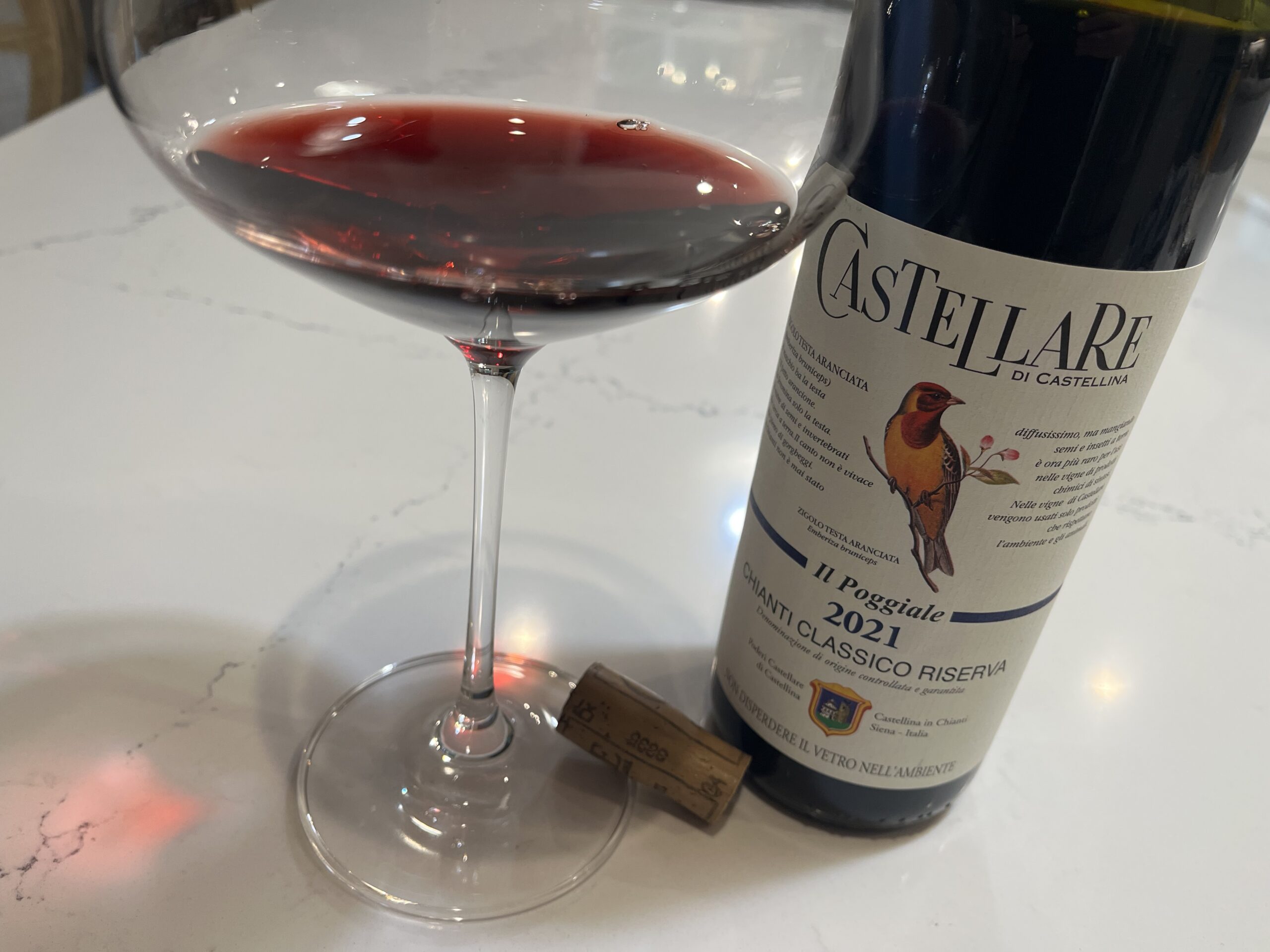
~ Drop dead gorgeous ~
The tiny Riecine farm was originally owned by a nearby monastery until the 20th century; in fact the church archives from 1112 A.D. provide the earliest known record of the wine farm called Riecine.
The founder of contemporary Riecine was John Dunkley, an Englishman who was a sort of pioneer for the new style Chianti Classico, based solely on Sangiovese. With his Italian wife Palmina Abbagnano, John acquired the original 1.5 hectares of land in 1971 from nearby Badia a Coltibuono. They restored the old stone villa on the land and began reviving and replanting the vineyards. Since 2011, the estate has been owned by Lana and Alessandro Frank.
The 2024 Riecine Chianti Classico (Gaiole) isn’t as charming as the story, I’m afraid. It’s a pretty ruby color with aromas of crushed cherry and spices that are very nice. In the mouth is where it kind of goes dull. There’s nothing wrong here, but there is nothing memorable. It’s rather bland with its snappy cranberry fruit that is monolithic in style. I like its freshness but many Classicos deliver more. I thought maybe it needed air, but over the course of a long dinner where many other wines were enjoyed, this didn’t change much throughout the evening. Good, that’s it and not a good value. 85 points. Not yet released. But find this wine.
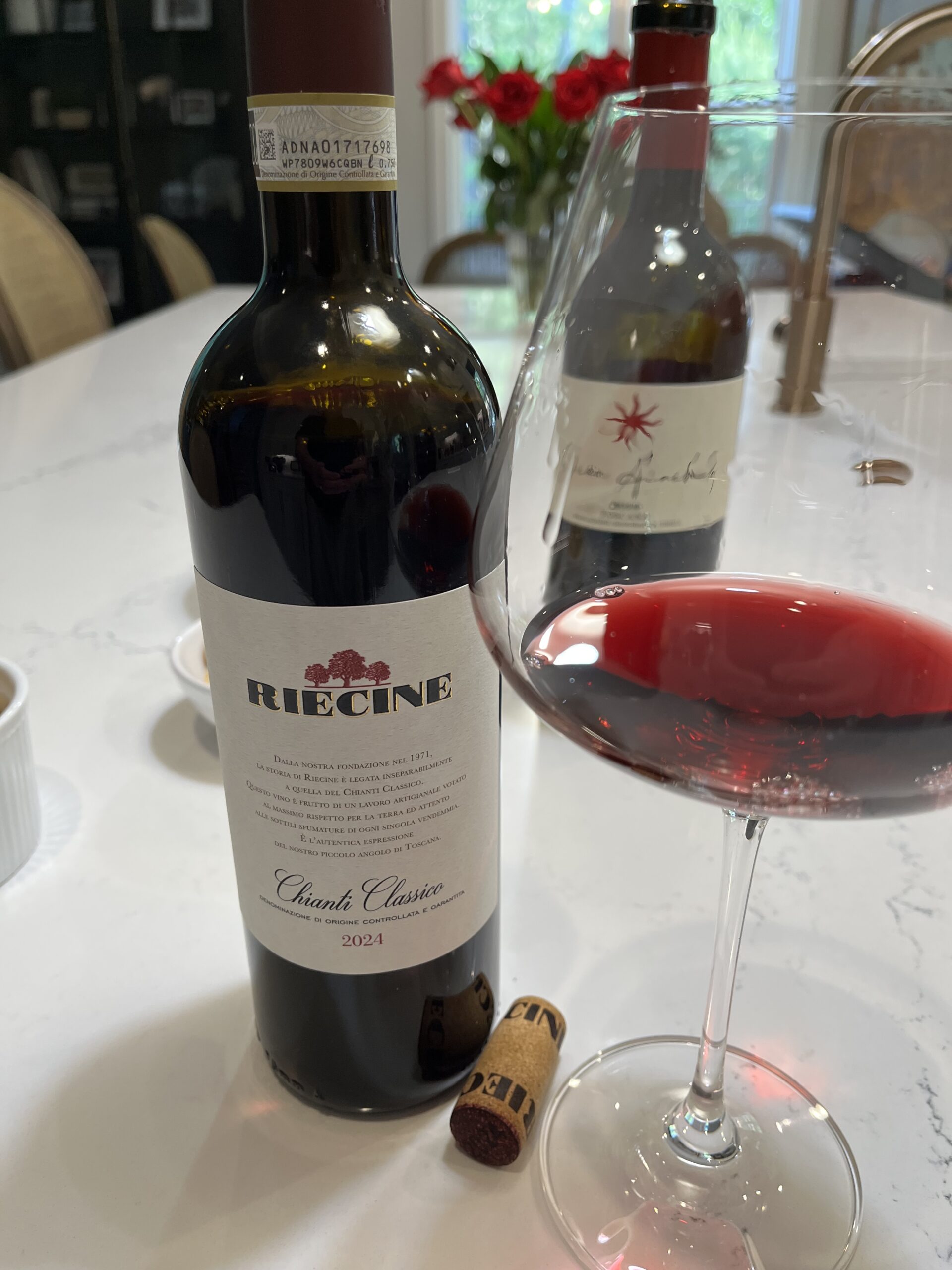
~ Nice enough, but not very exciting ~
Fontodi is a master of Sangiovese. The certified organic estate located in Panzano in Chianti has been crafting amazing wines under the direction of Giovanni Manneti for decades.
I’ve been to the Fontodi winery a few times and have always been pleasantly welcomed by Mr. Manneti. Though recently, in his role as the President of the Chianti Classico Consorzio, he’s often traveling. However he was showing us around and said, “You’re in for a treat today. We are bottling Chianti Classico right now and we only bottle one day per month – in alignment with the phases of the moon.”
Click here for that video: Fontodi Bottling
The 2022 Fontodi Chianti Classico (Panzano) is an astounding example of greatness in a less than optimal vintage. In fact, I was shocked at how good this wine showed last night. Deep ruby in color, it is almost opaque. The aromas were simply legendary. I mean, wow! Crushed raspberry, black cherry, sweet herbs and toasted spices are just lovely. On the palate, this is fresh as can be – lively, juicy and persistent. There’s a large core of red fruit backed by tobacco, coffee tones and hints of Christmas spice. The team a Fontodi consistently delivers results. Although this is a “simple” Chianti Classico, to me it’s in a category of its own – almost at a Super Tuscan level and given that, delivers quite a value. 95 points and about $44. Find this wine.
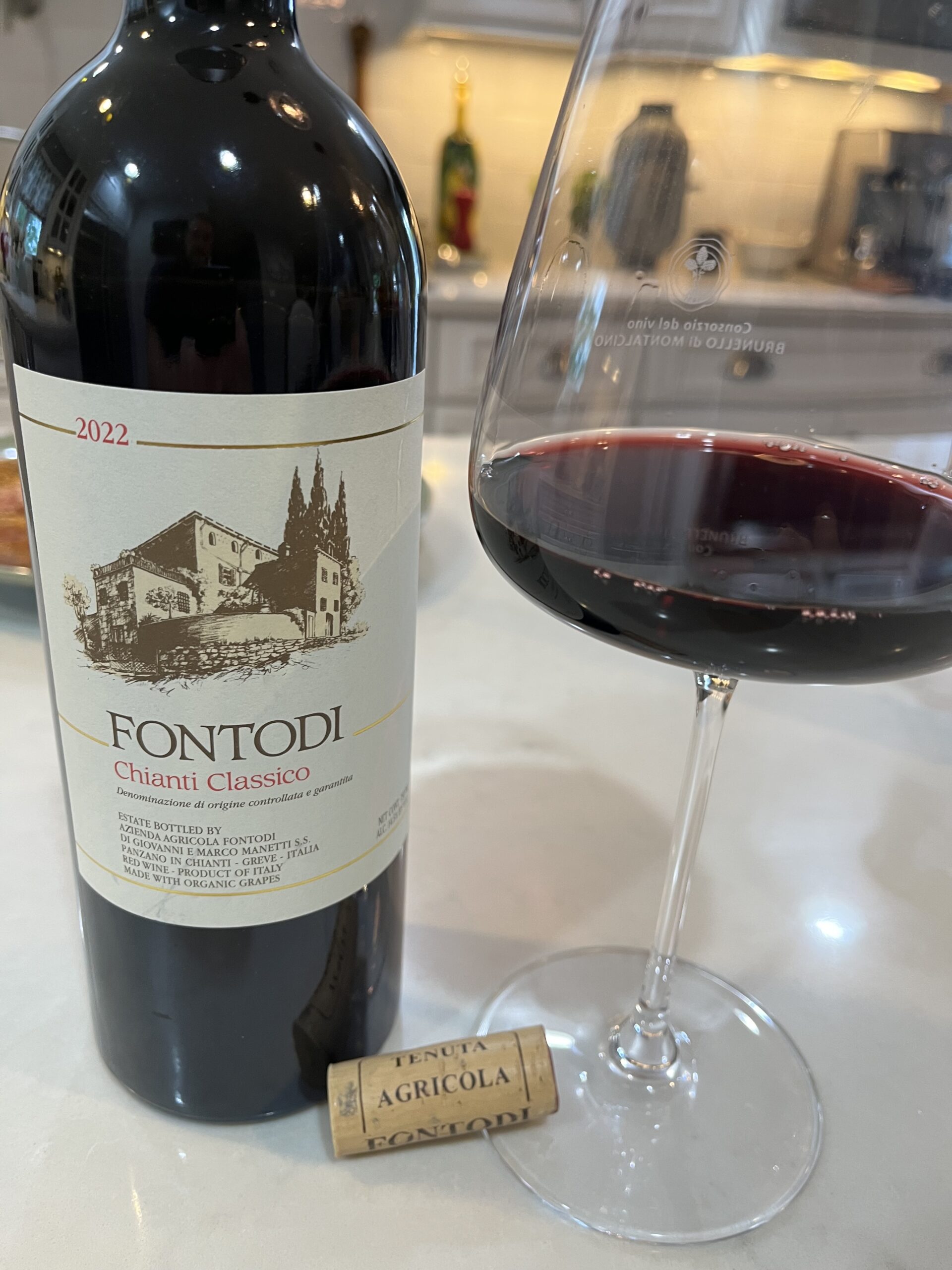
~ A gorgeous 100% Sangiovese. ~
With that, I’ll close Part 1. What did we learn? Wines from 4 vintages were included above and every one of them is available on the market. That says a lot about the varying times these wines are released. Granted, some are Riserva which require an additional year, yet these were not from my cellar. They were currently received samples.
Of the four vintages spotlighted, only 2023 really stands out as “flawed”. You can sense the drying nature of the tannins in those wines and note that they are slightly under ripe. I remember a winemaker posting a meme on Facebook during the 2023 harvest. He said his wine was 10% Sangiovese and 90% Copper Sulfate. Obviously he was joking, but the point was made.
Stay tuned for more data points on these wines. Part 2 will begin almost immediately – though I’ll be taking a break while I travel to Tuscany this weekend. So stay tuned to my Social Media as there will be lots of coverage coming.
Salute!


